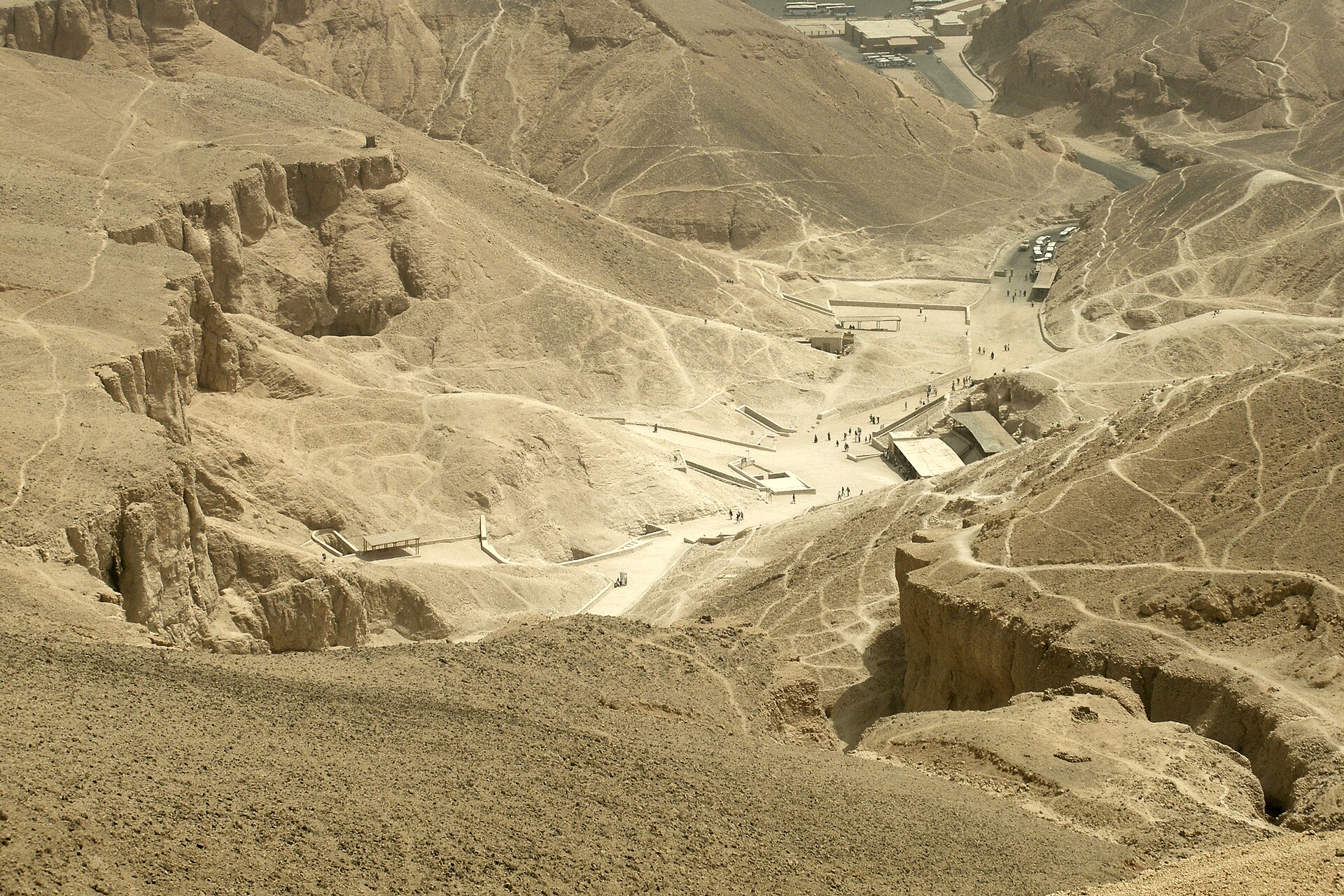
Thebes, Luxor, Egypt, Valley of the Kings from above — Vyacheslav ArgenbergVyacheslav Argenberg / Wikimedia CommonsCC BY 4.0
Introduction
The Valley of the Kings, on the west bank of the Nile at Luxor, is one of the world’s most significant archaeological landscapes. For nearly five centuries, pharaohs of Egypt’s New Kingdom were buried in rock-cut tombs hidden within a desert valley, their chambers decorated with intricate scenes from funerary texts and their burials furnished for the afterlife. Today, the site is part of the UNESCO World Heritage property of Ancient Thebes with its Necropolis, and it continues to be a focus of excavation, conservation and scholarly research. For culturally curious travellers, a visit here is not simply a checklist experience but an encounter with a complex funerary tradition and a living heritage that Egyptians rightly regard with pride.
This guide sets out what is known about visiting the Valley of the Kings, how guided access typically works, and how to plan a respectful and well-informed trip. It distinguishes permanent historical facts from time-sensitive practical details, which change and should always be verified on the official website before travel.
Essentials for your visitGuided tour · via TiqetsBook this tour → (opens the partner site in a new tab)Guided day tour of the Valley of the Kings, the Temple of Hatshepsut and the Colossi of Memnon: guide, return transport by air-conditioned coach and lunch. Entrance fees are not included.Partner link — availability and prices vary by provider and date.
Historical and cultural context: why the Valley of the Kings matters
The Valley of the Kings served as the principal royal necropolis of the New Kingdom, roughly between the 16th and 11th centuries BCE. More than sixty tombs have been identified, ranging from modest single-chamber pits to elaborate multi-room complexes. Among the most celebrated is the tomb of Tutankhamun (KV62), discovered in 1922, but the valley also holds the burials of rulers such as Ramesses II, Seti I, Hatshepsut (in a tomb later adapted) and many others. The decoration programmes inside these tombs — including the Litany of Re, the Book of the Dead and the Amduat — offer rare insight into ancient Egyptian beliefs about the journey of the sun god and the afterlife of the king.
The valley is also a landscape of work: the village of Deir el-Medina, home to the artisans who cut and decorated the tombs, lies nearby and provides a counterpoint to the royal monuments. Together with the mortuary temples at Medinet Habu and the Colossi of Memnon, the west bank forms a dense cultural landscape best understood as a whole. For visitors, this context is essential: the tombs are not isolated artworks but components of a ritual and administrative system that sustained the New Kingdom state.
Conservation is a constant concern. The tombs are subject to humidity, visitor traffic and environmental pressures, and access to individual tombs is often rotated or restricted to protect them. This means that what you can see on any given day may vary, and the official website is the authoritative source for current access arrangements.
Planning your visit: what is officially available
Visiting the Valley of the Kings is typically organised around a standard admission ticket that allows entry to a set number of tombs, with additional separate tickets for certain tombs such as Tutankhamun and Ramesses V/VI. The exact number of tombs included, the tombs open on the day, and the ticketing system are subject to change; check the current admission prices and conditions on the official website before your visit. Timed-entry tickets may be in use, and availability and access conditions vary; check the official website or your chosen provider for current details.
Guided visit options, where offered, are listed on the official website. Many travellers choose to hire a licensed Egyptologist guide, either through official channels or reputable local operators, to gain deeper context. A guide can explain the iconography, the history of excavation and the significance of specific scenes, but access to tombs is governed by the site authorities and is not guaranteed by any guide or tour. It is important to book through official or licensed providers and to confirm what is included.
The site is exposed and hot for much of the year. A visit typically involves walking over uneven ground, climbing steps and entering narrow, sometimes steep passages. Visitors should consider their fitness and comfort, carry water, and wear appropriate footwear. There is a visitor centre and a small land train that runs from the centre to the valley floor, but these facilities and their operation can change; verify details on arrival or via the official website.
Guided tour · via TiqetsSee this tour → (opens the partner site in a new tab)Guided day tour of the Valley of the Kings, the Temple of Hatshepsut and the Colossi of Memnon: guide, return transport by air-conditioned coach and lunch. Entrance fees are not included.Partner link — availability and prices vary by provider and date.
Getting there: practical transport options
The Valley of the Kings is located on the west bank of the Nile, opposite the city of Luxor. Most visitors stay in Luxor and cross the river by ferry, bridge or local transport. Organised tours often include pick-up from hotels on the east or west bank, but independent travellers can also use taxis, ride-hailing services (where available) or the public ferry combined with a local taxi or microbus. The journey from the east bank typically takes around 30–45 minutes depending on traffic and the crossing point.
For those based on the west bank, the valley is a short drive away. It is advisable to agree on a fare or use a metered service before setting out, and to confirm the return journey with your driver. The site is well signposted, but the final approach involves a road that leads to the visitor centre and parking area. Public transport options are limited, so many visitors find a private taxi or a guided tour the most straightforward way to reach the valley. As with all transport in Egypt, conditions and services can change; check locally or with your accommodation for current advice.
Booking cultural experiences: official ticketing, guided tours and special programmes
Official ticketing for the Valley of the Kings is administered by the Egyptian Ministry of Tourism and Antiquities. Tickets are typically purchased at the site’s ticket office or, in some cases, through official online channels. Prices can change; see the current admission prices on the official website before your visit. Standard admission usually covers a set number of tombs, while separate tickets may be required for specific tombs or for the tomb of Tutankhamun. Availability and access conditions vary; check the official website or your chosen provider for current details.
Guided visit options, where offered, are listed on the official website. Licensed guides can be arranged through hotels, local agencies or directly at the site, but it is wise to confirm credentials and what the tour includes. Some operators offer combined tours that include other west bank sites such as the Temple of Hatshepsut at Deir el-Bahri, the Valley of the Queens and Medinet Habu. These can be a convenient way to see multiple sites in one day, but quality and group size vary. Booking through official or licensed providers is recommended.
Special programmes, such as lectures or temporary exhibitions, may be available from time to time; check the official website for announcements. There is no guarantee of access to any specific tomb, and site authorities may close tombs for conservation or other reasons without prior notice. Visitors should be prepared for changes and follow the instructions of site staff.
When considering guided experiences, it is important to distinguish between official offerings and third-party tours. The official website is the most reliable source for what is officially available. Some providers may offer transport, guiding and entry coordination, but they do not control access to tombs. Always read the terms and conditions carefully, and check current conditions on the official website.
Practical visitor tips and nearby cultural recommendations
A visit to the Valley of the Kings is best combined with other sites on the west bank to appreciate the wider necropolis. The Temple of Hatshepsut at Deir el-Bahri, a short drive away, is a striking example of New Kingdom architecture and offers a different perspective on royal commemoration. The Valley of the Queens, including the tomb of Nefertari (subject to separate ticketing and availability), and the workers’ village of Deir el-Medina provide insight into the lives of those who built the royal tombs. The Colossi of Memnon and the mortuary temple of Ramesses III at Medinet Habu are also nearby and well worth including in a day’s itinerary.
Practical tips: start early to avoid the heat and crowds, carry sufficient water, wear a hat and sunscreen, and be prepared for dusty conditions. Check the official visitor rules before taking photographs; rules may vary by tomb and can change. Respect any barriers or restrictions, and follow instructions from site staff. The site is not fully accessible for visitors with limited mobility, and some tombs involve steep climbs and narrow passages. Visitors with claustrophobia should consider which tombs to enter.
For context before or after your visit, the Luxor Museum on the east bank and the Egyptian Museum in Cairo hold important collections, but closer at hand, the Mortuary Temple of Seti I at Gurna and the Tombs of the Nobles offer further insights. Local guides can help interpret the scenes, but always ensure they are licensed. Accommodation and dining options are plentiful in Luxor, but this guide does not recommend specific hotels or restaurants; travellers should consult current reviews and official sources.
The Valley of the Kings is a place of extraordinary historical importance and ongoing conservation challenges. A well-planned visit, with realistic expectations and a respect for the site’s rules, can be deeply rewarding. Guided access, where available, can enrich understanding, but it does not guarantee entry to specific tombs. Always verify time-sensitive details such as opening hours, ticket prices and which tombs are open on the official website before you travel. By approaching the site with curiosity and respect, visitors can contribute to the sustainable preservation of this irreplaceable heritage for future generations.
Tell us about your destination, dates and cultural interests. SmartMuseum can help prepare a refined request with selected cultural travel partners. Availability, access conditions and pricing vary by provider and date.
Updated: October 31, 2026
Independent editorial — no paid rankings
SmartMuseum premium cultural guides
Scroll to Top
Audience measurement
With your consent, SmartMuseum measures visits to its pages and clicks to its partners (/go/ links) with Google Analytics 4.
Learn more
Google receives technical data for this (pages viewed, device, browser, approximate country) and a cookie is stored for up to 13 months. Nothing is used for advertising. You can change your mind at any time with the “Cookies” link at the bottom of the page.